
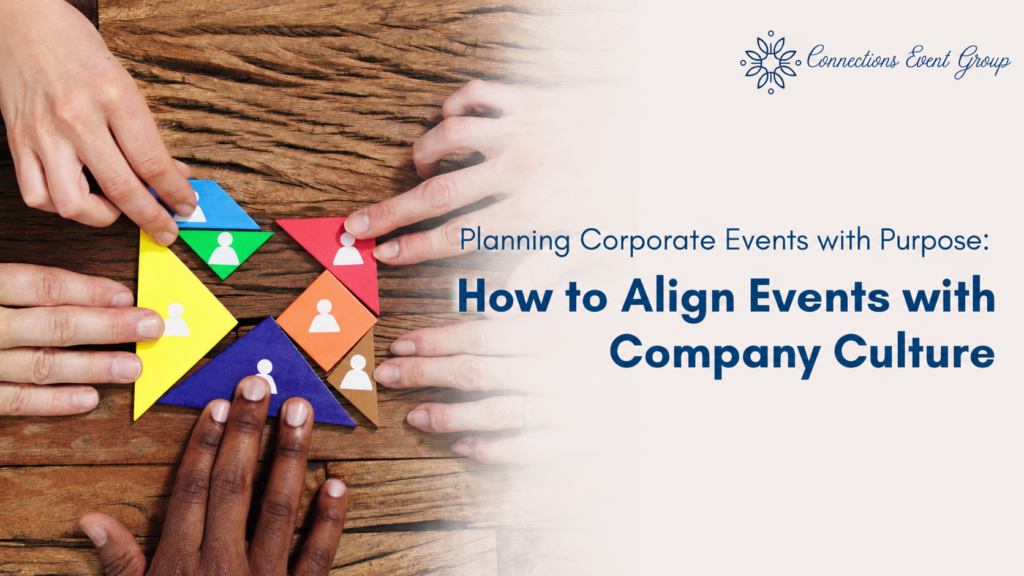
Corporate events are more than just gatherings; they’re opportunities to reinforce company culture, strengthen team bonds , and inspire employees. But too often, these events feel disconnected from an organization’s core values, leaving attendees disengaged and underwhelmed . To create lasting impact, corporate events should be intentionally designed to reflect and amplify company culture, ensuring employees feel a deeper connection to the mission and proud to be part of the team.
Why Purpose-Driven Events Matter
In a time when employees are seeking more meaningful workplace experiences, a well-crafted purpose-driven event can reinforce a company’s mission, celebrate achievements, and foster a culture where employees feel valued. These events do more than fill a calendar, they serve as powerful tools to:
- Foster employee engagement and retention
- Strengthen alignment with company values
- Boost morale and team cohesion
- Enhance employer branding and reputation
Strategies for Aligning Corporate Events with Company Culture
1. Define Clear Objectives
Before planning an event, ask: What is the purpose? Whether you’re celebrating a milestone, fostering team collaboration, or launching a new initiative, clearly defining the event’s purpose ensures alignment with broader business goals. The event should be a natural extension of a company’s mission and values.
- Example: A company that values innovation might host a hackathon or an interactive brainstorming session instead of a traditional conference.
- Example: A company that prioritizes wellness could incorporate mindfulness sessions, movement-based activities, or host a wellness retreat.
2. Weave Core Values Into the Experience
Your company’s mission and values should be reflected in every aspect of the event—from the venue and programming to the guest speakers and activities.
- If sustainability is a core value, consider eco-friendly venues, zero-waste catering, and digital event materials.
- If inclusivity is a priority , ensure diverse speaker representation and create opportunities for all employees to participate comfortably.
3. Personalize the Experience
Employees are more engaged when events feel personal and relevant. Tailoring experiences to different roles, interests, and personalities within the company can significantly increase impact.Consider breakout sessions designed for specific teams or professional development tracks that support individual growth.
- Use pre-event surveys to understand employees’ preferences and expectations.
4. Incorporate Interactive and Immersive Elements
Move beyond passive experiences;interactive elements boost engagement and help participants feel like they are part of the company story and leave a lasting impression.
- Host live polling sessions, panel discussions with audience participation, or immersive storytelling elements.
- Incorporate gamification, team challenges, or virtual/augmented reality to make events more dynamic and memorable.
5. Create Space for Meaningful Connections
The best corporate events that strengthen relationships and build a sense of community, come out on top. To foster meaningful connections, it’s helpful to consider psychological safety and intentional design to create spaces that will reach a wider range of personalities.
- Design curated networking opportunities, such as speed networking or topic-based discussion tables.
- Encourage collaboration through team challenges or small group sessions that facilitate deeper connections.
6. Celebrate Employee Contributions
Recognizing employees during corporate events reinforces a culture of appreciation, and strengthens loyalty and engagement
- Spotlight team members who embody company values.
- Offer awards or incentives tied to company goals, such as innovation awards, leadership recognition or peer nominated honors).
7. Follow Up and Measure Impact
A purposeful event doesn’t end when the last guest leaves. Measuring impact and gathering feedback ensures continuous improvement and demonstrates how purpose-driven events can impact ROI, ROE, team morale and productivity.
- Send post-event surveys to assess employee engagement and gather insights.
- Analyze participation metrics and identify opportunities to refine future events.
The Future of Purpose-Driven Corporate Events
As workplaces continue to evolve , corporate events must move beyond logistics and entertainment to become strategic tools for reinforcing culture and inspiring employees. When aligned with company values, events are not only enjoyable — they become meaningful experiences that strengthen engagement, loyalty, and long-term success.